
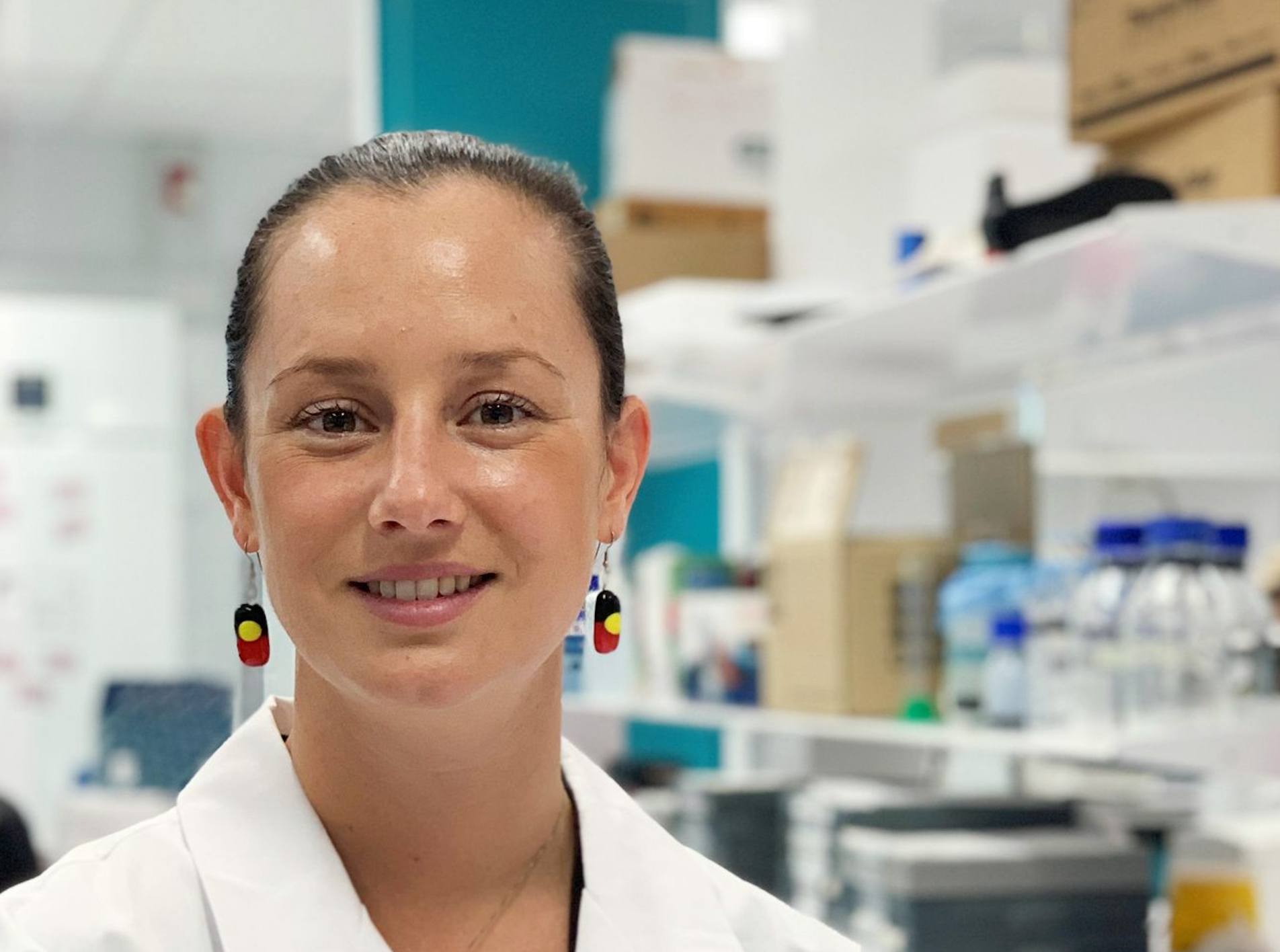
Dr Jessica Buck is an early career research fellow at the Brain Tumour Research Team at the Telethon Kids Institute and the University of Western Australia in Perth, WA. Jessica completed her doctorate at the University of Oxford, UK, and was named as one of the Superstars of STEM by Science and Technology Australia in 2021. Dr Buck is an inspiration to young Aboriginal women in STEM, routinely hosting and mentoring students. Jessica has experience in both preclinical neuroscience and oncology research with a current focus on finding more effective, less harmful treatments for children with brain cancer.
Meet the Researcher
Why is this project game-changing?
To do this, the team will use laboratory models that incorporate a 'complete' immune system. Having an immune system is essential for testing new immunotherapies, and allows development of brain-specific childhood approaches. This project will study the childhood brain tumour microenvironment, especially the immune compartment, during cancer growth and treatment to uncover the best timing to administer immunotherapy to childhood cancer patients.
How can it potentially help people with brain cancer?
This project will develop a new model for testing immunotherapy in the childhood cancer setting. This will help children with brain cancer from three perspectives (1) allowing for identification of more effective childhood cancer-specific treatments (2) improve our understanding of child-specific toxicities and (3) enhance our ability to translate the most effective therapies into the clinic faster.
Scientific description
Using paediatric mice to model paediatric brain tumours
Very few new cancer drugs have been identified for children. We believe this is partially because children are treated as “small adults” in cancer drug discovery. Without exception, cancer drugs are tested in adult clinical trials, with trials in children only performed later, if at all. Furthermore, virtually all preclinical studies have been conducted in adult mice rather than paediatric mice. This completely ignores differences that exist between adults and children in the developmental stage of their brain, immune system, organs, and tumour microenvironment. we will develop world-first techniques to more accurately evaluate new childhood cancer therapies in paediatric mice, rather than in adult mice as is done currently. We hypothesise this will better identify childhood cancer-specific treatments and child-specific toxicities, improving our ability to translate the best therapies into the clinic faster. In particular, our pipeline will enable the testing of promising new immunotherapies in paediatric mice for the first time. Using our paediatric models, we will pioneer the development of preclinical standard-of-care protocols, including radiotherapy, for paediatric mice that mimic clinical protocols. This will then give us clinically-relevant and age-appropriate model systems with which we can overlay and evaluate new immunotherapies, thus expediting their translation to upfront clinical trials. Our long-term vision is that introduction of effective new therapies will afford a reduction in the dose of toxic chemotherapies and radiotherapy currently used for standard-of-care, so that all brain cancer patients can live long, happy, and healthy lives.
• HOPE • COMMUNITY • OPENNESS •