
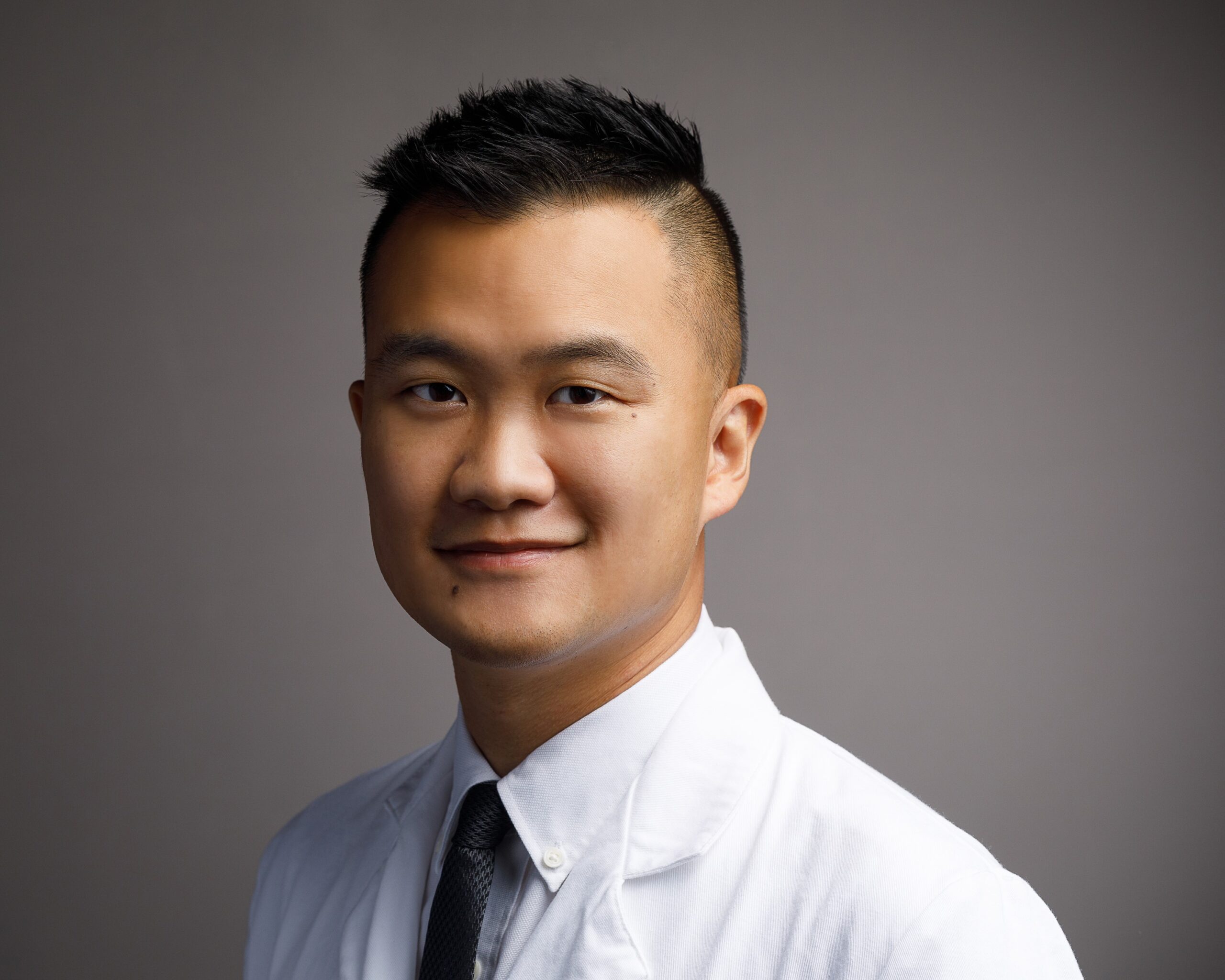
Dr Jacky Yeung is a fellowship-trained neurosurgeon-scientist at Yale University who is an expert on the human brain connectome and studied brain tumour immunology under world-renowned immunologist Dr Lieping Chen. Dr Yeung is among the first to fully characterise the tumour immune microenvironment in malignant meningiomas (a rare brain cancer) and identified a major mechanism by which these tumours evade anti-tumour immunity.
Meet the Researcher
Why is this project game-changing?
Such a molecule has never been discovered before for changing the characteristic of a tumour blood vessel. Its potential for treating brain cancers is simply untapped. We know in real world clinical trials, regular immunotherapy does not work in brain cancers, but the addition of antibodies targeting CD93 may hold the key in unleashing the body's immune system to battle brain cancers with minimal side effects.
How can it potentially help people with brain cancer?
This project aims to resolve one of the greatest problems in tumour immunotherapy, by allowing infiltration of immune cells into the tumour microenvironment, which will enable other scientists to combine their own immunotherapeutic strategies for the treatment of brain cancers. In essence, this treatment strategy is an enabling tool for other immunotherapy researchers to work on further treatments for brain cancer patients.
Scientific description
Targeting CD93/IGFBP7 axis to normalise tumour vasculature and improve T cell trafficking in human gliomas
Tumour vasculature has been theorised to present chemical and physical impedance to effector T cell trafficking. Recently, Dr Yeung’s research group interrogated gene expression profiles in tumours under the treatment of VEGF inhibitors and identified CD93 as a potential target that mediates vascular normalization. The group identified a novel interaction between CD93 and IGFBP7, both overexpressed in tumour but not normal vasculature, that could be antagonised to improve drug delivery and increase immune infiltration.
Aggressive gliomas displayed poor response to nivolumab (anti-PD1 mAb) and overexpression of the IGFBP7/CD93 pathway has been associated with poor response to anti-PD therapies in other cancers. Blockade of the CD93/IGFBP7 using proprietary antibodies developed by the group successfully turned “cold” tumours into “hot” tumours with increased T cell infiltration in preclinical melanoma and pancreatic cancer models.
VEGF overexpression is commonly found in high-grade and recurrent gliomas so CD93-IGFBP7 would likely be induced in these aggressive tumours. Indeed, CD93 expression was recently found to be highly expressed in GBM vasculature, but not in normal brain vessels.
Targeting the CD93/IGFBP7 axis has the potential to enhance the effects of immunotherapy in malignant gliomas without unwanted side-effects of anti-VEGF therapy as CD93/IGFBP7 is downstream in signalling.
• HOPE • COMMUNITY • OPENNESS •