
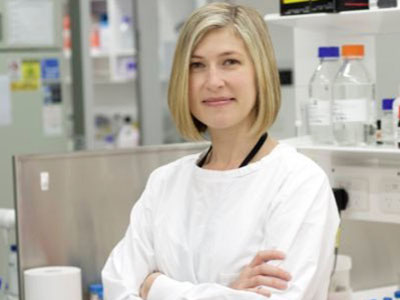
Dr Kristina Cook is an up and comer cancer researcher who fought her own battle with a rare tumour. She studied at Oxford and the National Institutes of Health (NIH) where she has collaborated and published with leaders in the cancer field, including 2019 Nobel Prize winner in Medicine, Professor Peter Ratcliffe.
Meet the Researcher
Why is this project game-changing?
The power of the circadian rhythm in controlling how the body functions is just being understood. For example, it was only in 2017 that the Nobel Prize in Physiology went to scientists finding what controls the circadian rhythm. Now, only a few years later, we’re already taking this knowledge and seeing whether it’s the missing link in understanding why targeted treatments are not working in brain cancer.
How can it potentially help people with brain cancer?
Brain cancer is one of the best genetically mapped cancers but despite this, treatments targeting specific genes of the cancer have not worked. Perhaps it is not the failure of the treatments but the failure to give the treatments at the right time of day, where it will have the most impact and stop the cancer in its tracks.
Scientific description
The cancer clock is (not) ticking: how brain tumour hypoxia regulates circadian rhythms
Circadian rhythms are physiological, behavioural and cellular changes that follow a daily 24-hour cycle. These rhythms are encoded as a ‘molecular clock’ in the genome of nearly every cell of the body. Individual cells in the body are normally synchronised to the external time by a ‘master clock’ present in the suprachiasmatic nucleus of the brain. Clinical and laboratory-based studies have suggested links between disrupted cellular circadian clocks and brain tumour progression, but the mechanisms are poorly understood. It is vital that we understand how circadian rhythms affect brain tumour growth and progression, as they may be a novel anti-cancer strategy.
One proposed mechanism of circadian control is through tumour hypoxia (low oxygen). Hypoxia is common in high-grade brain tumours, particularly glioblastoma, due to rapid cell proliferation. Both hypoxia and circadian disruption are associated with aggressive behaviour in brain tumours. Furthermore, hypoxia can ‘reset’ circadian rhythms and tumours may use this to control circadian and oncogenic pathways.
This project aims to understand how hypoxia can alter circadian rhythms to increase brain tumour progression, with the goal of identifying whether the circadian rhythm can be used to synchronise brain cancer cells to a time of day where they are most vulnerable to attack through new drug targets.
• HOPE • COMMUNITY • OPENNESS •